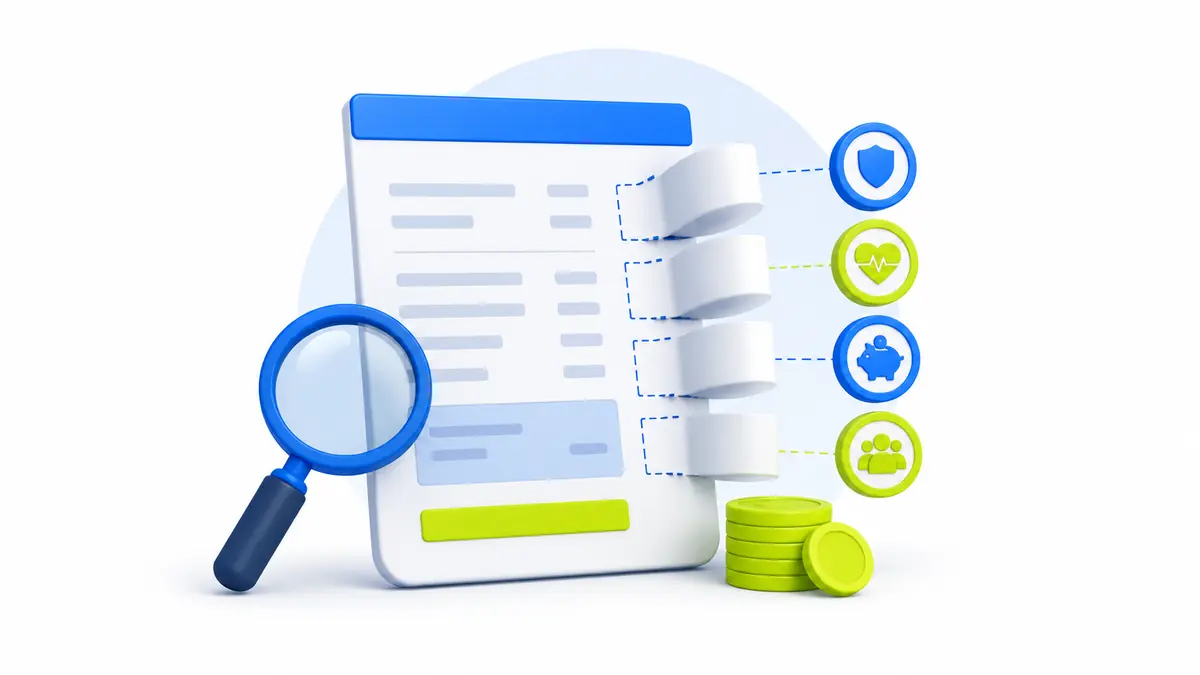
An employee's money arrives in predictable deposits on a fixed schedule, already taxed, and the only system they need is a budget. A freelancer's money arrives in uneven pieces from different clients, some of it belongs to the IRS, and some months it doesn't arrive at all. The skills are the same ones anyone uses to manage money, but the setup is different, and doing it in the wrong order is how people end up spending tax money or living on credit between invoices.
This page is the map for that setup: the accounts to open, the order to build things in, how to get paid more reliably, and where credit fits in. Each step points to the guide that covers it in detail.
1. Separate the business money
The first move is the plainest: give the business its own account. Running everything through one personal account is how income, expenses and tax money blur together, and it's why so many freelancers can't say at the end of the year what they actually earned. A separate account turns your bank statement into a clean record of the business.
Whether you need a formal business account, or whether a second personal account will do for a sole proprietor, is a genuine question with a practical answer that depends on how many clients you have and how you're paid. Do Freelancers Really Need a Business Bank Account? works through it honestly. If you decide to open one, Best Business Bank Accounts for Freelancers explains what to compare: fees, how deposits arrive, and whether the account lets you split money into separate buckets automatically.
Two practical points before you open anything. Many business accounts ask for an Employer Identification Number, and getting one takes minutes on the IRS site — you never have to pay a fee for an EIN, so ignore any website that charges for one. And make sure your money is protected. At a bank, deposits are automatically insured to at least $250,000 at each FDIC-insured bank; at a federally insured credit union, share insurance covers up to $250,000. Newer online providers often hold your money at a partner bank, so confirm where it sits and that the protection applies. Deposit insurance covers deposits; it does not cover stocks, bonds or crypto assets.
2. Build a buffer before anything else
With income that swings, a cash reserve does two jobs: it covers genuine emergencies, and it carries you through the slow months that every freelancer has. That second job is why the usual advice written for salaried workers tends to be too thin for someone who can lose their biggest client with a single email.
The Consumer Financial Protection Bureau makes the point that the amount you need depends on your situation, and suggests keeping it in a bank or credit union account, generally considered one of the safest places to hold it. The practical question is how many months of expenses to aim for when your income isn't steady, and that's what How Big Should a Freelancer's Emergency Fund Be? answers, based on how concentrated your client base is and who depends on your income.
3. Pay yourself a steady salary
Once the business has its own account and a buffer, you can stop living directly off whatever arrives this month. The approach that works for most freelancers is to let all income land in the business account and pay yourself a fixed amount on a schedule, the way an employer would. In a strong month the surplus stays in the business; in a slow one, the buffer tops up your pay.
Before any of that, the tax share of each payment comes off the top, because it isn't yours to budget with. The taxes guide explains why and how much. Feast-or-Famine Budgeting then shows how to set the salary figure and what to do with windfalls.
4. Get paid faster and more reliably
Cash flow problems for freelancers are more often timing problems than earning problems: the work was done and invoiced, and the money is still weeks away. Small changes to how you invoice make a large difference — clear due dates, a deposit before work starts, and a polite, automatic reminder system. How to Get Paid Faster as a Freelancer covers the terms and habits that shorten the wait.
The tools matter less than the habits, but the right software removes friction: sending invoices, taking card payments and tracking expenses for tax time. Invoicing and Accounting Apps for Freelancers explains what to look for and how to judge whether a paid plan earns its cost. Remember that software you use for the business is generally a business expense, and business expenses are usually deductible if the business operates to make a profit.
If you work with clients in other countries, the cost of getting paid can hide in the exchange rate rather than in the visible fee. Getting Paid by International Clients explains how to compare the real cost of each method.
5. Business credit, last
A business credit card is useful for keeping expenses separate and for smoothing the timing of costs, but it's the step that can undo the others. Carry a balance and you're paying 20%-plus interest on business spending, which is exactly the kind of cost a freelancer with an uneven income can least afford. Used as a payment tool and paid in full, it helps; used as a loan, it hurts. Best Business Credit Cards for Freelancers explains how to choose one and how to run the numbers on rewards against annual fees.
Building a credit profile for the business itself, separate from your personal credit, is a longer project. It becomes worthwhile when you want to borrow for equipment or growth without leaning on your personal score. How to Build Business Credit From Scratch lays out the steps.
What can wait
Business credit can wait until the business has steady revenue and a track record. So can elaborate accounting software; a simple invoicing tool and a spreadsheet are enough for many freelancers in their first year. What should not wait is the separate account and the buffer, because every later step depends on them.
Your next step
If your business and personal money still share an account, open a separate one this week and route your next payment into it. Then start the buffer, even if the first deposit is small. The rest of this page can follow at your own pace.